How often should you power wash your house in NJ?
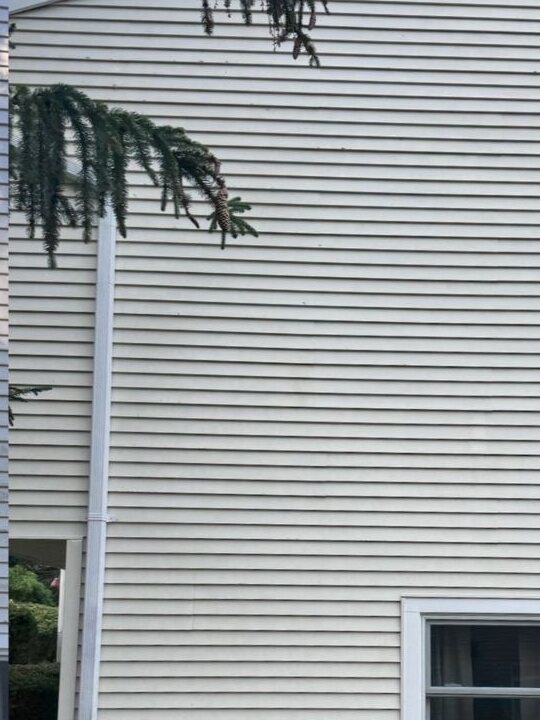
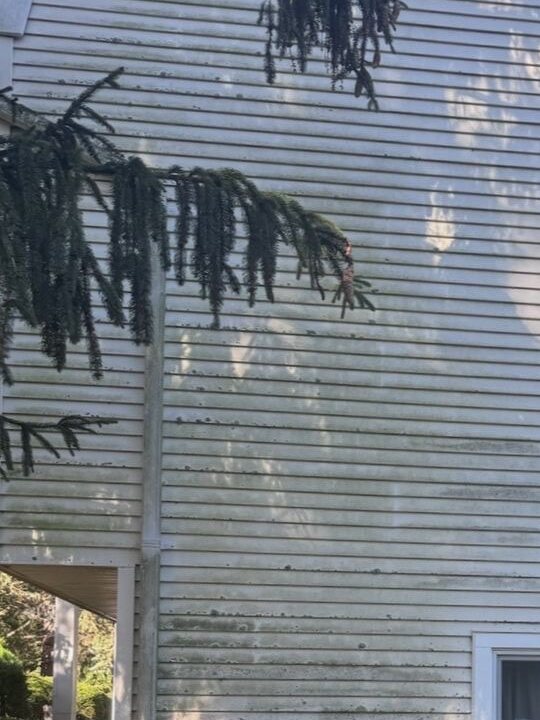
In New Jersey, the general rule is once a year. At the Jersey Shore — Ocean County, Brick, Toms River, Point Pleasant, Barnegat, and everything in between — that window often tightens to every 9–12 months. Salt air, humidity, pine pollen, and shade from backyard trees accelerate mold, algae, and grime buildup faster than anywhere inland. Waiting longer risks permanent staining.
There is no single right answer for every home. A light-colored ranch on an open lot in Toms River washes up differently than a dark two-story tucked under pitch pines in Berkeley Township. But the baseline — once per year, ideally in the spring or early fall — keeps most shore homes looking clean and protects the siding and roof from the kind of deep-set staining that no amount of scrubbing will fully reverse.
This guide breaks it down by surface, by the specific forces at work in Ocean County, and by the warning signs that tell you a cleaning is already overdue. If you want to skip to the per-surface frequency table, jump to the surface schedule below.
What's the general NJ baseline for house washing?
For most of New Jersey — suburban Morris County, Central Jersey, and the inland parts of Monmouth and Burlington counties — once a year is enough to stay ahead of mold and mildew. The combination of four seasons, moderate humidity, and typical tree cover creates conditions where annual cleaning keeps siding bright and roofs clear.
Most house washing and roof cleaning professionals in the state will tell you the same thing: skip a year and you'll see it; skip two and you may be dealing with staining that requires a second application or extra dwell time to lift. The math favors regular cleaning — a $299–$450 annual soft wash is a fraction of the cost of re-siding or replacing a roof.
Mold and algae on vinyl siding can begin to permanently discolor the surface after 12–18 months of unchecked growth. On roofs, Gloeocapsa magma algae feeds on the limestone in asphalt shingles — the longer it sits, the more granules it destroys. A soft wash that costs $399–$700 protects a roof worth $8,000 or more to replace.
That annual baseline is a starting point, not a ceiling. If you live closer to the water — or in the pine-heavy interior of Ocean County — the forces at work on your home are meaningfully different from what a homeowner in Morris Plains deals with.
Why do Jersey Shore homes need washing more often than the NJ average?
Four factors combine at the shore that don't exist inland: salt air deposits from the ocean and bay, higher baseline humidity that keeps surfaces damp between rain events, heavy pine pollen from the Pinelands that feeds biological growth, and dense tree shade that prevents UV light from killing mold and algae on north-facing walls and rooflines.
Salt air from the ocean and bay
You don't have to live on the beachfront to feel this one. In Ocean County, salt-laden air from Barnegat Bay and the Atlantic moves inland regularly, depositing fine sodium chloride particles on every exterior surface. Salt is hygroscopic — it actively pulls moisture from the surrounding air — which means your siding, roof, and deck stay subtly damp longer than they should after rain or dew. That persistent dampness is exactly what mold and algae need to establish and spread.
Coastal humidity
The Jersey Shore has meaningfully higher average humidity than the NJ interior. Summer relative humidity regularly sits in the 75–85% range, and even on mild days the proximity to water keeps the air dense. High humidity extends the window mold and algae can grow on exterior surfaces and slows the drying that would naturally inhibit it. This is why you see green and black buildup on Shore homes faster than on identical houses in, say, Sussex County.
Pine Barrens pollen and organic debris
Homes in the inland parts of Ocean County — Jackson, Manchester, Lacey, Berkeley — sit at the edge of or inside the Pinelands. The pitch pines that dominate this landscape drop enormous quantities of yellow pollen in the spring, followed by a steady stream of needles, sap, and debris through the rest of the year. That organic material settles on roofs, siding, and decks and acts as a nutrient layer that feeds mold, mildew, and algae. It also stains — pine sap on siding is stubborn even with a proper soft wash if it has had time to cure.
North-facing shade and the algae microclimate
Walk around any Ocean County neighborhood and look at the north face of the houses. Almost universally, you will see more green and black growth there than on the south or west faces. The reason is simple: UV light from direct sun kills mold and algae, and the north side of your home gets almost none. Pair that with the shade from pitch pines or neighboring houses, and you have a microclimate that rarely dries out and rarely sees sun — which is basically perfect for biological growth.
The combination of Barnegat Bay salt air pushing inland, Pine Barrens pollen and debris feeding organic growth, and shade from mature pitch pines creates conditions where north-facing siding and shaded rooflines can visibly mold over in a single season. This is why we recommend annual cleanings in Ocean County where an inland NJ homeowner might get away with every 18 months. The house is working harder here — your cleaning schedule should reflect that.
How often should each surface be cleaned?
Not every surface on your home works on the same schedule. Your roof grows algae differently than your concrete driveway. Here is the per-surface breakdown based on what we see across Toms River, Brick, Jackson, Barnegat, and the rest of Ocean County — adjusted for coastal conditions.
| Surface | Recommended frequency (Ocean County) | Key driver | Notes |
|---|---|---|---|
| Siding (vinyl, Hardie, stucco) | Every 9–12 months | Salt + humidity + shade | North faces may need attention every 8–9 months if heavy shade |
| Roof (asphalt shingles) | Every 2–3 years | Gloeocapsa magma algae + pine debris | Shaded pitches (north/northeast) may show streaks annually; treat when visible |
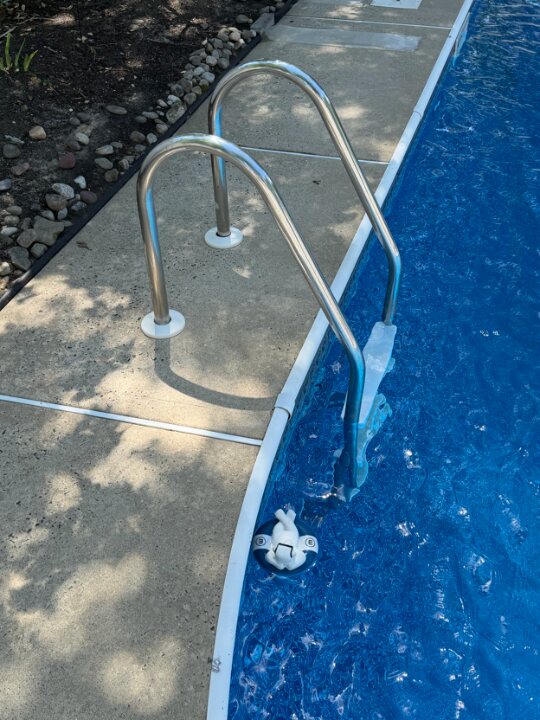
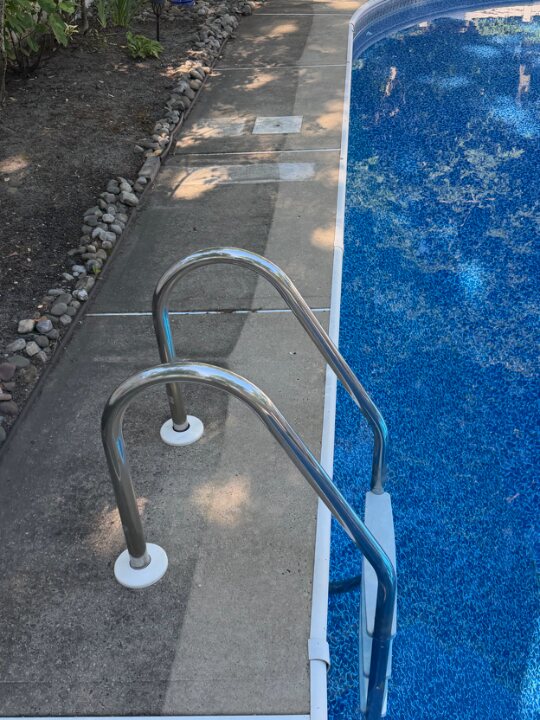
| Deck (wood or composite) | Every 1–2 years | UV damage + mildew from humidity | Bayfront or poolside decks often need annual cleaning; sealed decks stretch the interval |
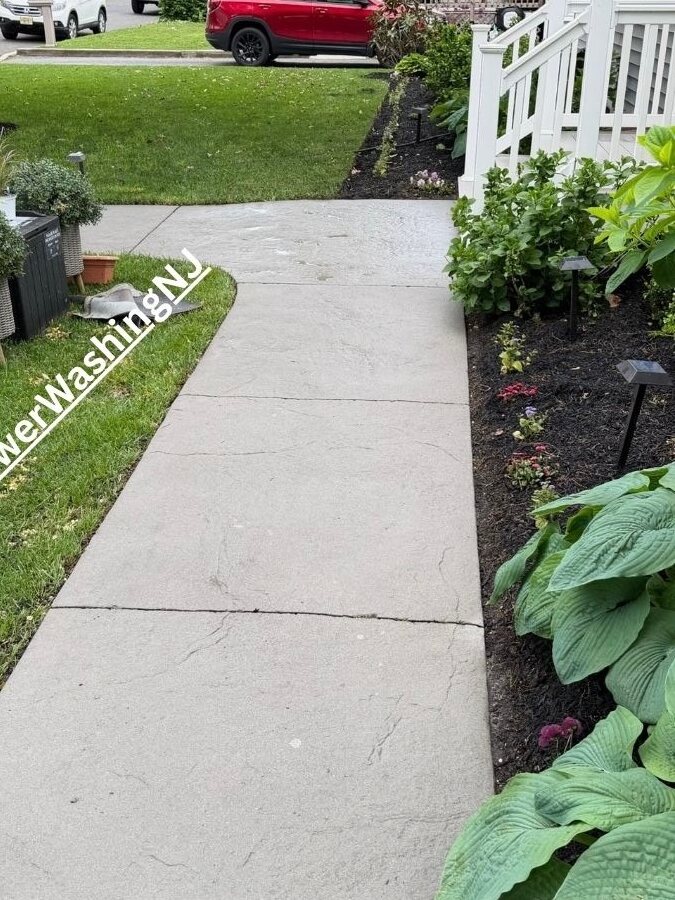
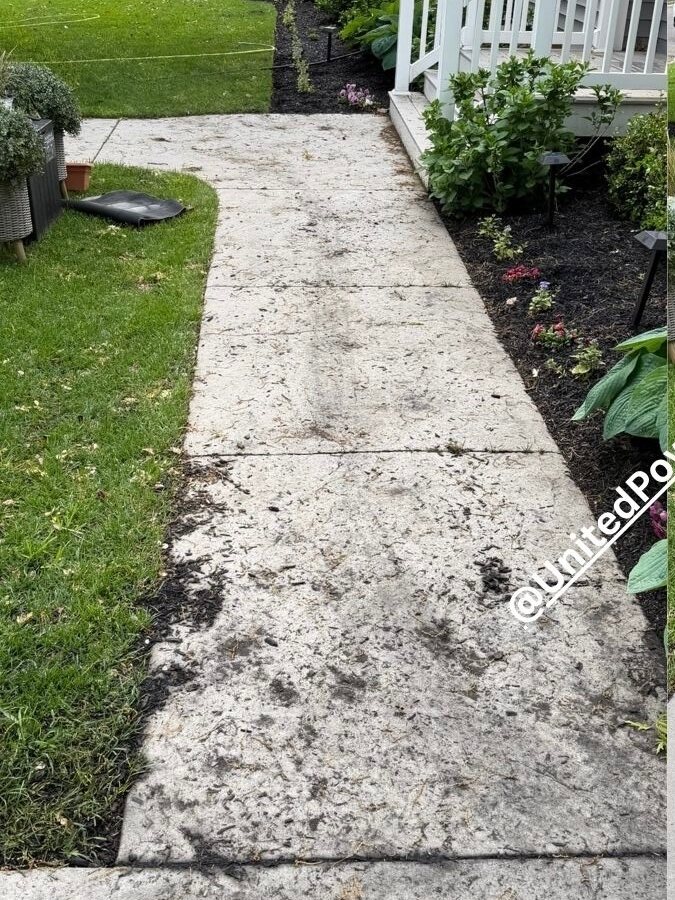
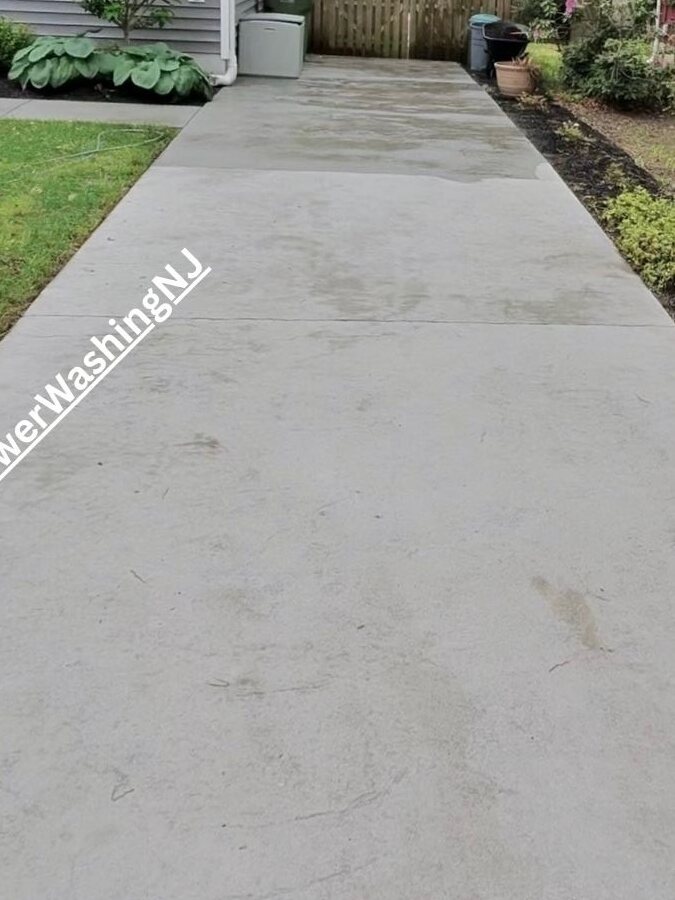
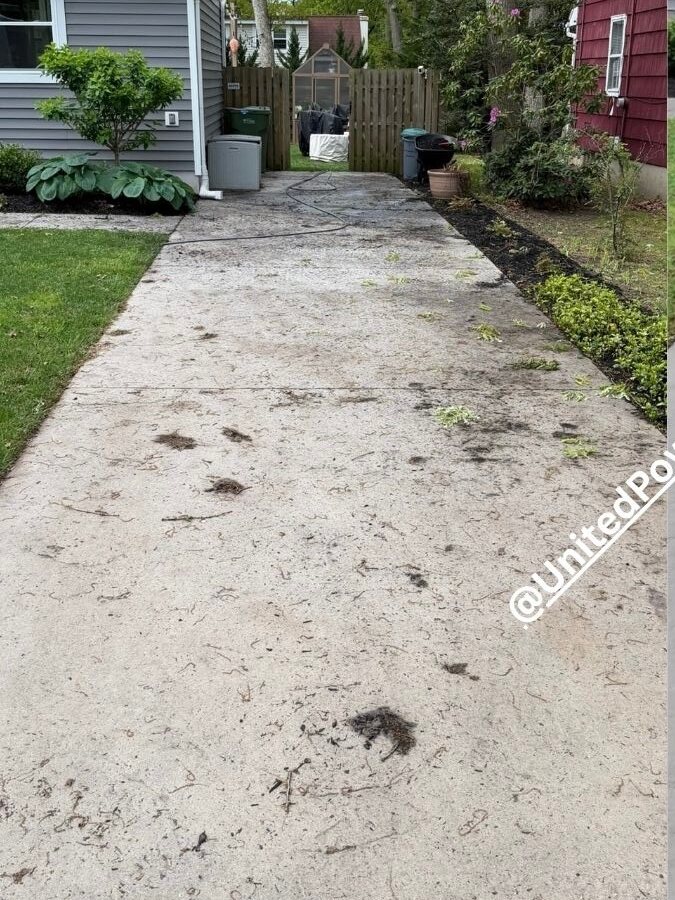
| Concrete (driveway, walkways, patio) | Every 1–3 years | Algae film + traffic + pine staining | Shaded sections can green over in one season; sunny driveways often last 2–3 years |
| Gutters (cleaning + brightening) | Twice a year (spring + fall) | Pine needles + leaf debris | Ocean County pines clog gutters fast; a fall clear-out prevents ice dams and fascia rot |
Frequencies assume no preventative sealing. Sealed decks and concrete can extend intervals by 6–12 months.
A few of these deserve more context. Roofs are the surface people most often under-clean — 'I can't see it from the ground' is the usual reason. But by the time you can clearly see the black algae streaks from the street, the infestation is well established and has been feeding on your shingles for a season or more. We cover the full detail on timing and cost in our Ocean County roof cleaning guide.
Gutters are the surface people most often over-complicate. You do not need a pressure washer for the inside — you need the debris cleared by hand, the downspouts flushed, and the outside faces brightened to remove the black oxidation streaks. Twice a year keeps them flowing and your fascia dry.
What's the best time of year to power wash your house in NJ?
Spring (April through June) and early fall (September through October) are the two prime windows. Spring cleaning removes the mold and grime that built up over winter and gets your home looking sharp before the summer season. A fall cleaning removes the summer's algae bloom and pine debris before cold weather lets them sit on your home for months.
The practical cold-weather cutoff is around 40°F. Soft washing at low temperatures is fine above that threshold — the chemistry still works and the low-pressure rinse won't freeze in the lines. Below 40°F, we won't spray: the runoff can ice on walkways and the cleaning solution's effectiveness drops meaningfully. For Ocean County, that means our season typically runs from early April through late November, weather-dependent.
For a deeper look at seasonal timing, including whether fall washing is worth it and what to expect in shoulder-season weather, see our best time to power wash in NJ guide. The short version: don't wait until spring if your home looks green in October. Clean it in the fall and start next season fresh.
The April-through-June window is our busiest period across Ocean County. Homes that look clean in February often have a winter's worth of salt and moisture damage that becomes obvious once the temperature climbs. If you want a spring cleaning, get on the schedule in late February or March — not May when we are already booked out weeks.
One other timing note that often gets overlooked: if you are planning to stain a deck, re-paint siding, or seal a driveway this year, the cleaning needs to happen several days before the application. Surface prep is not a last-minute add-on — it is step one. A proper house washing or deck clean at least 48–72 hours before painting or staining gives the surface time to fully dry before you coat it.
Signs you've waited too long to power wash your home
There is a meaningful difference between 'it's been a year, time to clean' and 'this has been growing for two years and there might be permanent damage.' Here are the signs that tell you a cleaning is already overdue — and what they mean for the job.
- Green or black streaking on north-facing siding that runs all the way to the foundation. This is established mold and algae that has had time to root into the siding. A soft wash will remove it, but if it has been there for 18 months or more, staining may remain even after cleaning.
- Black streaks on the roof that are visible from the street. Gloeocapsa magma algae — the organism behind 'black streaks on roof' — means the infestation is well past the early stage and has been actively eating shingle granules. The sooner you treat it, the more shingle life you save. See our roof cleaning service for what to expect.
- A deck that is gray and slippery underfoot. Gray coloring means UV-oxidized wood; the slippery film is algae. A wood deck this far gone will need a brightener application after cleaning to restore the grain — cleaning alone won't bring back the color.
- Gutters overflowing during rain. If you can see water sheeting over the side of your gutters during a storm, they are clogged. In a pined neighborhood, this can happen in as little as one season. The overflow is soaking your fascia and foundation — address it before the rot sets in.
- A concrete driveway with a permanent gray-green tint that doesn't wash off with rain. This is embedded algae. It needs a chemical pre-treatment and surface cleaning, not just a rinse. Left longer, it etches into porous concrete and becomes much harder to reverse.
- A chalky, faded haze on siding or painted surfaces. This is oxidation from UV exposure, often sped up by salt deposits sitting on the surface. It looks like the color has 'washed out.' Soft washing removes it, but if the oxidation is deep enough you may need a re-paint.
The common thread: every one of these conditions is cheaper and easier to address the sooner you address it. A two-year-old algae bloom on siding is not harder to clean than a one-year-old bloom — but the permanent discoloration it may leave behind is a problem no amount of cleaning will fix. If you are on the fence, request a free quote and we will give you an honest read on what we see.
After roughly 18–24 months of unchecked growth, the pigment from mold and algae can leach into vinyl siding and stain it at the molecular level. A professional soft wash will clean the surface, but the underlying stain may remain visible — particularly on white or light-gray siding in shaded spots. There is no cleaning solution that reverses this; the panel either weathers out over years or gets replaced. Annual cleaning prevents you from ever reaching this point.
Is an annual maintenance plan worth it?
For most Ocean County homeowners, yes. An annual maintenance plan locks in a cleaning schedule, prioritizes your slot on the spring calendar, and usually comes with bundled pricing that costs less than booking services separately. More importantly, it keeps the cleaning from slipping — which is how a once-a-year job quietly becomes every two years, and you end up with the staining problems described above.
Think about how a maintenance plan actually works in practice. We visit once a year — or twice, if you want a spring exterior wash and a fall gutter cleanout — and the job takes a few hours. You start the season with clean siding, a clear roof, and flowing gutters. The mold that would have established over the winter never gets a foothold. And because we are cleaning before heavy buildup, the job is faster and simpler each time.
The financial math is straightforward. A soft-wash house washing runs $299–$450 for a typical Ocean County home. A roof cleaning adds $399–$700 depending on size. If you let those intervals stretch and end up with heavy algae on both surfaces in the same year, you are still paying those same prices — but the job is harder, the results may not be as clean, and there is a real risk of permanent staining. Staying on schedule costs the same and produces better outcomes.
Here is how to set up a simple, effective annual maintenance plan for a Jersey Shore home:
- 1Schedule a spring house wash
Book your exterior soft wash for April or May, before the summer algae bloom peaks. This is the highest-value cleaning of the year — it removes winter mold and gets the house looking sharp before the season. Aim for the same window each year so it becomes a habit.
- 2Check the roof in late summer
Take a look at your roof in August or September. If you can see the early signs of black algae streaking — especially on north-facing or shaded pitches — schedule a soft-wash roof cleaning for that fall or the following spring. Roofs typically need cleaning every 2–3 years, so most years this is just a check, not a job.
- 3Clear gutters in November
After the pitch pines and hardwoods have dropped for the season, have the gutters cleared, downspouts flushed, and faces brightened. This is the most important fall maintenance step for Ocean County homes — clogged winter gutters cause ice dams, fascia rot, and foundation overflow. From $149 for most homes.
- 4Inspect the deck and concrete
Every other spring, take a close look at your deck surface and concrete. If the deck is going gray and slippery or the concrete has a visible green film, add a cleaning to your spring visit. Sealed surfaces can often stretch to every two or three years; unsealed wood decks in shaded yards often need annual attention.
- 5Get a bundled quote
When you schedule with us, ask about bundling your annual services. House washing plus gutter brightening, or a house wash plus roof check, often comes at a better combined price than booking separately. We also offer recurring-customer priority scheduling so your preferred spring slot is held each year. Request a quote to set it up.
Whether an annual plan makes sense also depends on how much you value your time and your peace of mind. If you are the kind of homeowner who is going to walk around the house every spring and think 'I should probably get that washed' without ever booking it — a scheduled plan eliminates the friction. The job just happens. You never end up with a two-year problem.
Not sure if your home actually needs a cleaning this year? We are honest about this. Read is house washing worth it for a direct, no-upsell answer. And if you want specific pricing for your home's square footage and surface type, check out the full breakdown at how often should you power wash your house.
Frequently asked questions
Every 9–12 months is the right cadence for most bayfront and near-water homes in Ocean County. Salt air from the bay deposits sodium chloride on your siding and roof, which pulls in moisture and accelerates mold growth. Homes with significant pine-tree shade or north-facing walls may need the faster end of that range. An annual spring cleaning keeps it from ever getting ahead of you.
Most Ocean County roofs need cleaning every 2–3 years. The black streaks you see are Gloeocapsa magma algae, which spreads faster on shaded, north-facing pitches. If you have significant pine tree cover over the roof or can already see streaking, lean toward the 2-year end. Roofs in open, sunny locations often look clean for 3 years or more before needing treatment.
Technically yes, but it is a false economy. Mold and algae that have been growing for 18–24 months are more established and may leave permanent discoloration on vinyl siding even after a proper soft wash. You also pay the same price for a heavily-soiled house as for a lightly-soiled one — often more, because heavy buildup takes additional dwell time. Cleaning before it gets bad costs the same and produces better results.
High-pressure washing (2,000+ PSI) on vinyl or Hardie siding can crack panels, blow out caulk joints, strip paint, and — most dangerously — force water behind the siding where it creates hidden mold and rot inside the wall cavity. Siding manufacturers including James Hardie specify low-pressure soft washing. The damage from a single incorrect cleaning can cost thousands to repair. Our full breakdown is in the soft-wash vs pressure-wash guide.
Absolutely. Fall cleaning (September–November) removes the algae and pollen that built up over summer and prevents it from sitting on your siding and roof all winter. We soft-wash in Ocean County through late fall as long as temperatures stay above 40°F. A clean fall job means you start the next spring ahead rather than behind. See our seasonal timing guide for more detail.
Steve Franco was born and raised in Toms River and started power washing at a young age. He founded United Power Washing to do exterior cleaning the right way: soft washing that kills mold at the root without damaging siding or roofs. A licensed, insured and bonded NJ contractor, he writes these guides to give Jersey Shore homeowners straight, no-nonsense answers.